Deep-sea corals are weird, wacky and wonderful. On this research expedition, we’ll use them to study our ocean, climate, and what the future holds for these incredible creatures.
When most people think of corals, it’s usually the reefs they build in warm, tropical waters like Australia’s Great Barrier Reef. However, corals can also live in the dark, cold depths of our ocean, surviving more than 4000 m below the surface. Known as deep-sea corals, these marine animals thrive in complete darkness, cold temperatures and under incredible pressure from the water above them.

Importantly, the hard skeletons that these corals build support and shelter other marine invertebrates, making them crucial components of deep marine ecosystems (see our biology page for more information!). The Galápagos Islands host an incredible diversity of deep-sea coral life, making it the ideal place to study these organisms.
When deep-sea corals grow, the properties of the seawater they live in is recorded by the chemical composition of their skeletons. Our team at the University of Bristol has used live corals to show that the chemical composition of their skeletons records ocean temperature, pH and carbon content. When these corals die, their skeletons can remain on the seafloor for thousands of years, waiting to be collected by scientists.
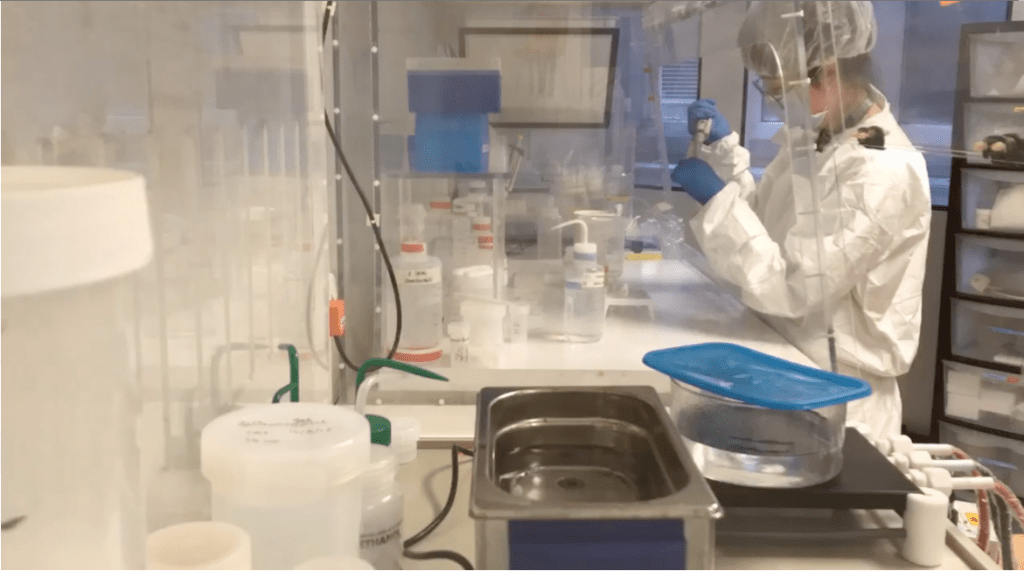
On this expedition, we will collect these fossil coral skeletons, date them using radioactive isotopes, and measure their chemistry to study changes in the oceans surrounding the Galápagos Islands over the last 50,000 years.
So, why are we doing this? The global ocean plays a crucial role in Earth’s climate, moving heat, nutrients and carbon around our planet.
The Galápagos Islands are a powerful example of this, because the waters surrounding the Islands have upwelled from the deep Southern Ocean and are rich in nutrients and carbon. This means studying changes in the oceans around the Galápagos can tell us about how the cycling of nutrients and carbon around our planet has changed through time. This is especially important for the future, as anthropogenic carbon dioxide (CO2) emissions are causing our climate to heat up.
Understanding how this will affect our planet, its oceans and the life they support in the future is difficult, but looking back into the past provides “natural experiments” which can help us understand these systems, and to predict the future.


 Galápagos Deep 2023 Expedition
Leave a comment