
By Amy Sing Wong
Desplácese hacia abajo para ver la publicación en español.
As we explore the deep ocean for corals, fossils and rocks… to put it simply, what else are we seeing in terms of wildlife? Well plenty!
On our transit from Costa Rica to the Galápagos, we were accompanied most of the way by a group of Nazca and Red-footed boobies. This included adults and juveniles, often following the met-tower on the bow of the the ship as we steamed across the Pacific ocean.
During the day as we wait for Alvin to return from a long day of diving and exploring the deep, the boat is stationary, and all on board can enjoy the wonderful wildlife that the open ocean offers. During one of our first stops, between Isla Santiago and Isla Isabela, whichever direction you looked you would see a white splash. What was splashing around us? Mobula rays! All around the boat, they could be seen in the near distance, treating us with the fabulous display of breaching. Some assume this is to help remove parasites from their body and others conclude it could be a form of communication, to attract more rays to a mating event or even could be a way of group hunting.

Mobula rays jumping during transit from Costa Rica. Video courtesy of Lydia Crampton
After a few days of intense work, I thought I was just seeing floating coconuts bobbing along. I saw them disappear and re-appear, then another one a short distance away. Surely, there aren’t this many coconuts floating around is in the middle of “nowhere”. I needed to go get my trusty binoculars and take a closer look. However, using binoculars on a swaying ship and these brown looking spheres bobbing along, wasn’t as easy as I thought it would be. After 10 or 15 minutes of trying… maybe longer. I managed to hone in on one! TURTLE. I knew it wasn’t a coconut! I believe it was a Green Turtle after consulting with Stuart Banks. Then you couldn’t stop seeing them, we seemed to be in the middle of one of their meeting grounds, and enjoyed their company until the sunset.
Moving to the night shift created a great opportunity for sunrise wildlife spotting. Whilst light hit and the sun rose, a pod of Shortfin Pilot whales swam past. This amazing sighting was very close to the ship as we approached our next dive site. Unfortunately, I missed the close up whilst on a mapping shift, but did manage a glimpse of them in the distance. Another, amazing moment I managed to miss just before dinner was a mega pod of dolphins enjoying the wake of the ship, and incredibly a thresher shark swam by during the morning launch of Alvin. However, one of the regulars is the Galápagos sea lion, where we can usually spot one swimming by nearly every day so far.

Thresher shark swimming – Video courtesy of Lydia Crampton
Those bird fans out there- you would not be disappointed. Welcoming us into Puerto Ayora, was a Brown Pelican, who relaxed on the ship for some time, hoping for an easy meal, no doubt. The sea birds we encounter are also in abundance. Positioned in open water with the islands off on the horizon, we get to spend more time observing the birds than most. At sunset you may enjoy flock of Swallow-tailed Gulls or see them relaxing on the surface during the day. Nazca boobies often fly alongside the ship and are great to observe as they soar and dive down rapidly towards to the waters surface, and with one sharp turn, glide elegantly just centimetres above the water.


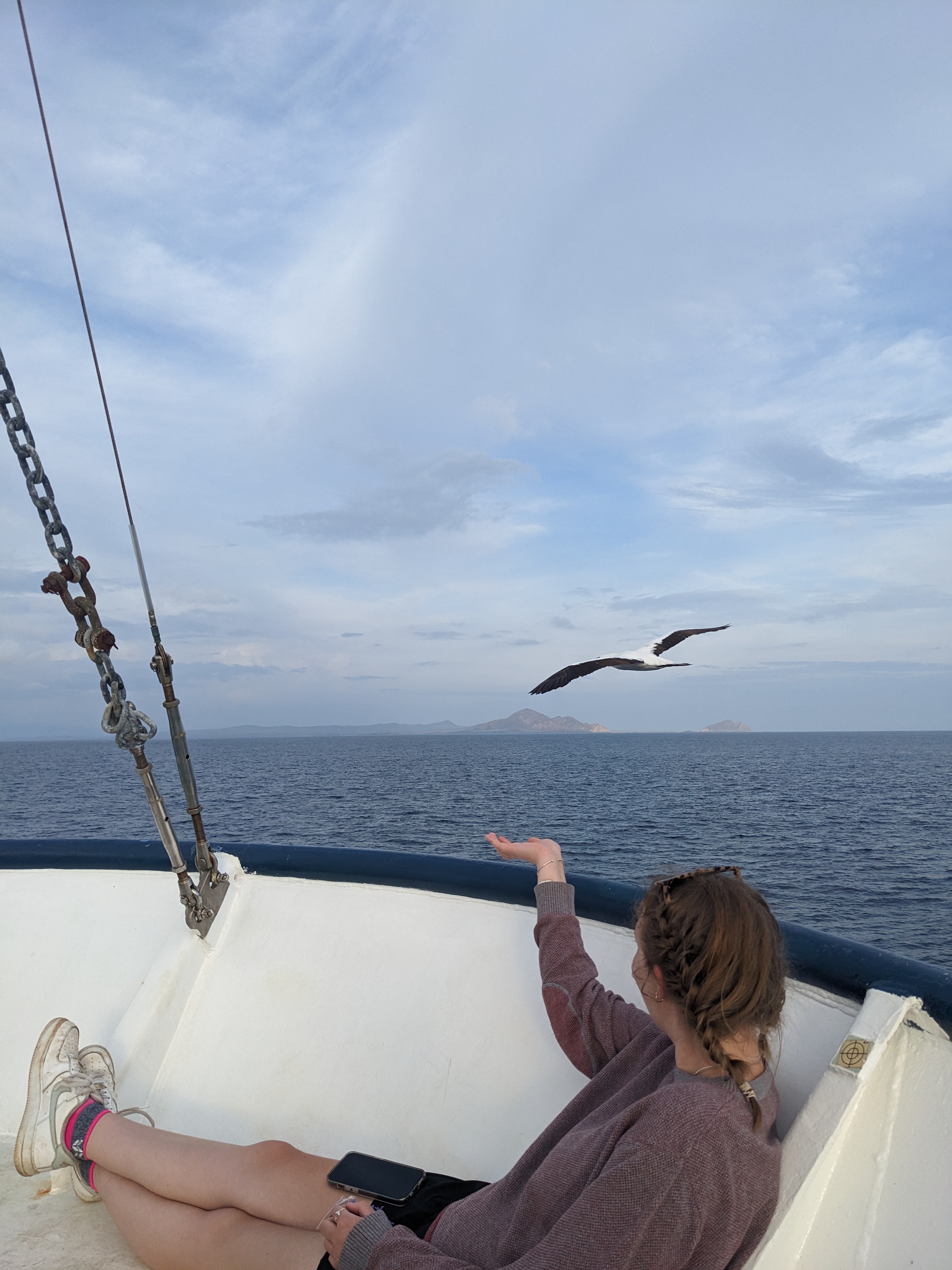
Swallowed-tails Gulls resting in a line on the surface. Lydia and a Nazca booby on the bow of the ship. Photos courtesy of Amy Sing Wong.
One quiet morning after sunrise, “squawk”! We look up and a group of 4 or 5 Magnificent frigate birds are above us, seeming to be fussing over something. They swoop over the boat and in front of the bow we see one bird drop something, it’s shiny looking and long – possibly a needle fish. They’re all after it, another dives in and catches the fish, however, this fish doesn’t seem to be going down easily. Another individual regurgitates up the fish and this is passed along for a few minutes, until one manages to catch a break and perch on the ship’s mast to gulp it down. What a sight to witness, these large magnificent birds interact right above us.
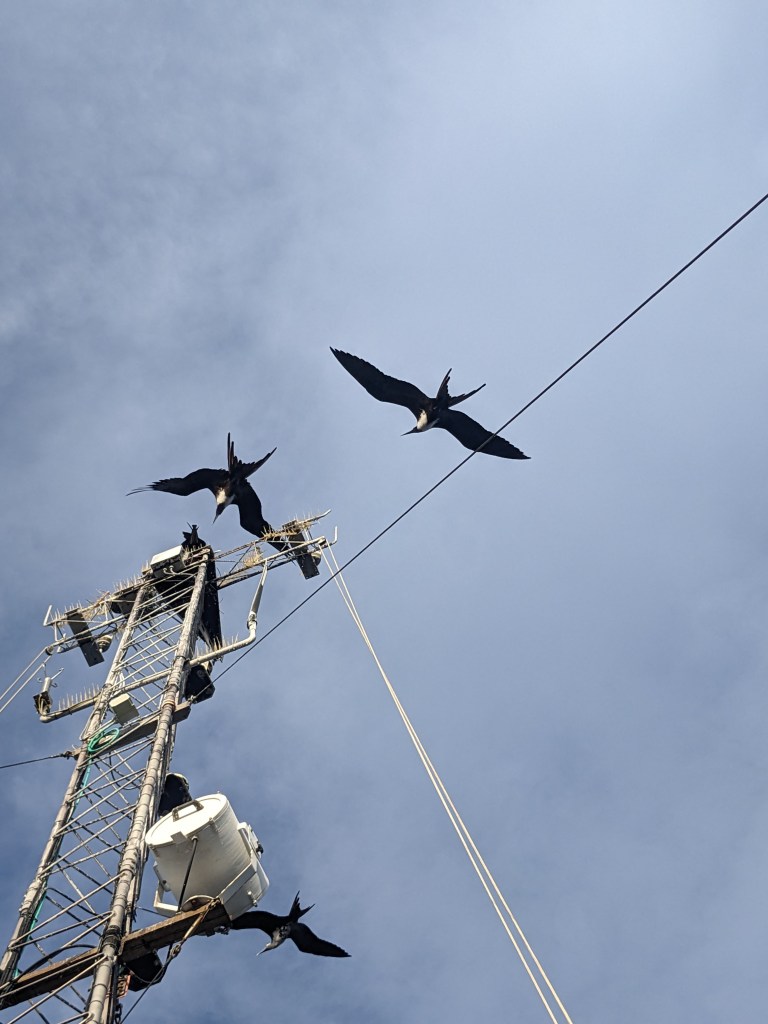
Exploring around the Galápagos islands has been an incredible experience, ensuring that you will enjoy a wildlife encounter everyday, frequently with the backdrop of epic volcanic islands like you have never seen before. Upon closing up this blog, I managed to get my whale encounter! Nearly eight Shortfin Pilot whales can be see from all sides of the ship, swimming along and spouting clouds of water, before diving down to the deeper waters whilst presenting their majestic tail flukes!

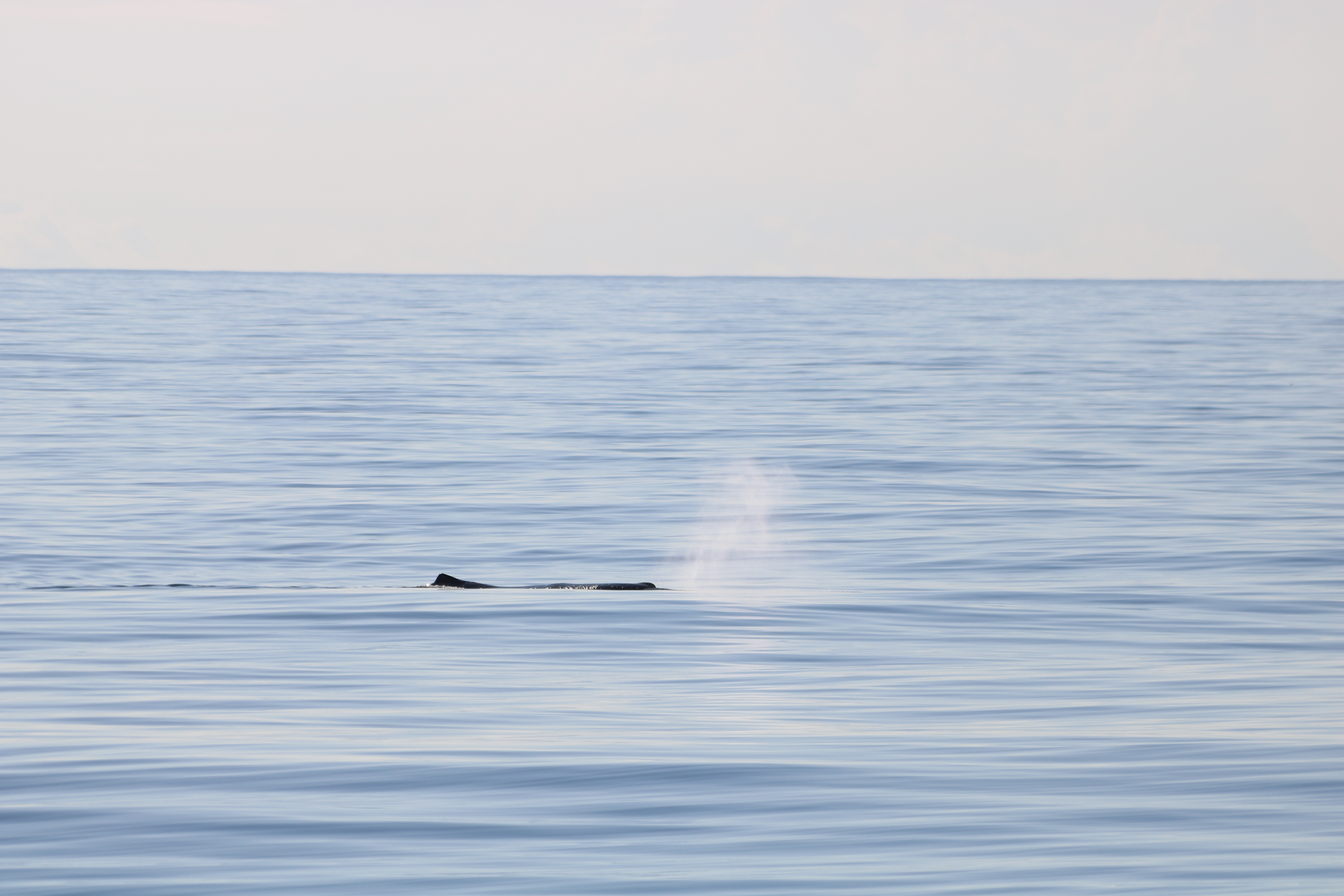
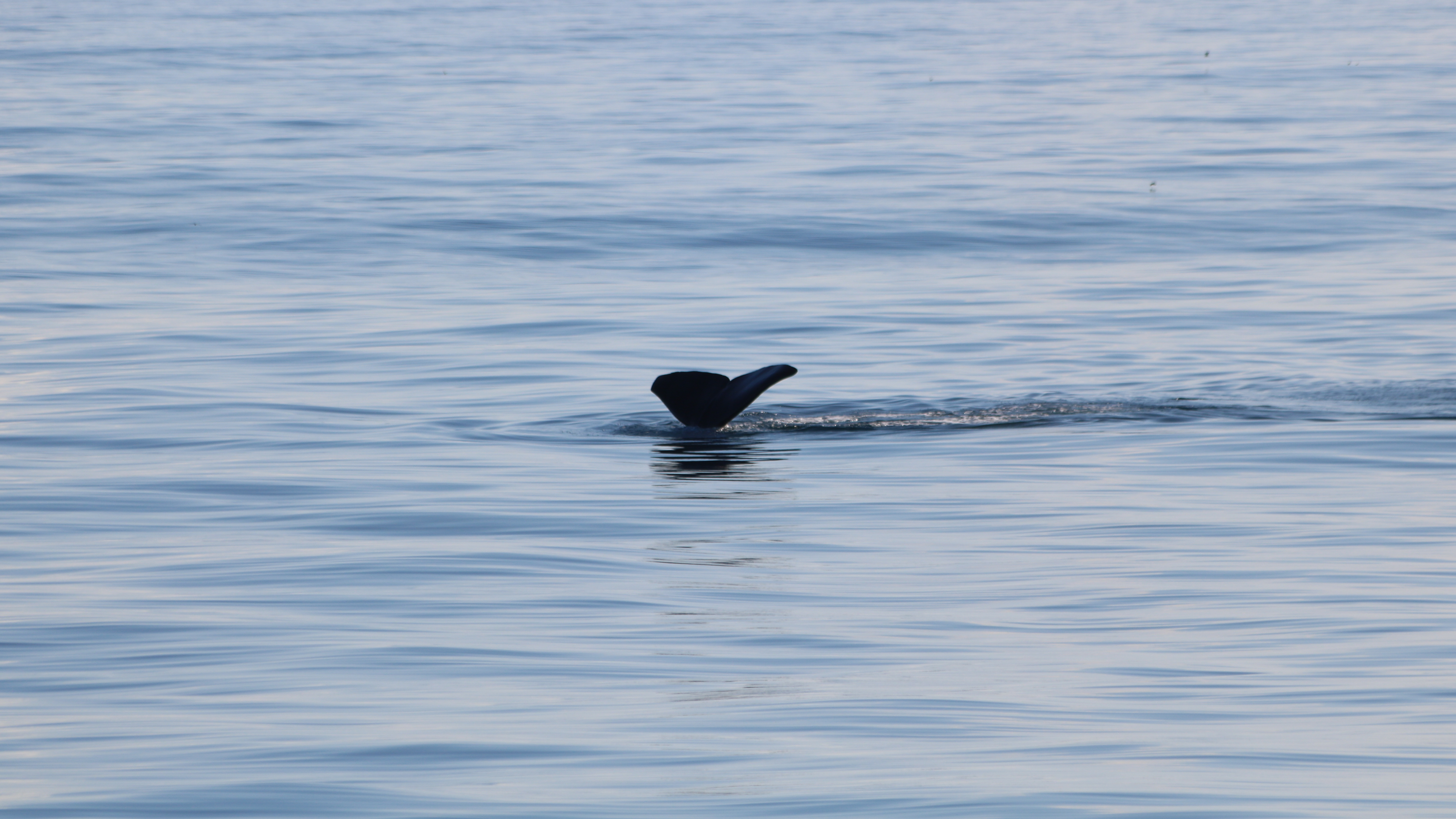
WHALE photos courtesy of Michelle Taylor
The jury is out on the identification of the whales!
I cannot wait to see what may appear next!
Biodiversidad marina y avifauna de Galápagos: ¿Qué más estamos viendo?
Por Amy Sing Wong
A medida que exploramos las profundidades del océano en busca de corales, fósiles y rocas… en pocas palabras, ¿qué más estamos viendo en términos de vida silvestre? ¡Pues un montón!
En nuestro tránsito de Costa Rica a las Galápagos, fuimos acompañados la mayor parte del camino por un grupo de piqueros de Nazca y patirrojos. Esto incluía adultos y juveniles, a menudo siguiendo la torre meteorológica en la proa del barco mientras navegábamos a través del océano Pacífico.
Durante el día, mientras esperamos que Alvin regrese de un largo día de buceo y exploración de las profundidades, el barco está inmóvil y todos a bordo pueden disfrutar de la maravillosa vida salvaje que ofrece el mar abierto. Durante una de nuestras primeras paradas, entre Isla Santiago e Isla Isabela, en cualquier dirección que miraras, verías una salpicadura blanca. ¿Qué estaba salpicando a nuestro alrededor? Rayos mobula! Alrededor del barco, se podían ver a corta distancia, obsequiándonos con la fabulosa exhibición de ruptura. Algunos asumen que esto es para ayudar a eliminar los parásitos de su cuerpo y otros concluyen que podría ser una forma de comunicación, para atraer más rayas a un evento de apareamiento o incluso podría ser una forma de caza grupal.
Después de unos días de intenso trabajo, pensé que solo estaba viendo cocos flotando. Los vi desaparecer y reaparecer, luego otro a corta distancia. Seguramente, no hay tantos cocos flotando en medio de “la nada”. Necesitaba ir a buscar mis binoculares de confianza y echar un vistazo más de cerca. Sin embargo, usar binoculares en un barco que se balancea y estas esferas marrones que se balancean, no fue tan fácil como pensé que sería. Después de 10 o 15 minutos de intentarlo… tal vez más. ¡Me las arreglé para afinar en uno! TORTUGA. ¡Sabía que no era un coco! Creo que fue una tortuga verde después de consultar con Stuart Banks. Entonces no podías dejar de verlos, parecíamos estar en medio de uno de sus lugares de reunión, y disfrutamos de su compañía hasta el atardecer.
Pasar al turno de noche creó una gran oportunidad para observar la vida silvestre al amanecer. Mientras la luz golpeaba y salía el sol, una manada de calderones de aleta corta pasó nadando. Este increíble avistamiento fue muy cerca del barco cuando nos acercábamos a nuestro próximo sitio de buceo. Desafortunadamente, me perdí el primer plano durante un turno de mapeo, pero logré verlos en la distancia. Otro momento increíble que logré perderme justo antes de la cena fue una mega manada de delfines disfrutando de la estela del barco, e increíblemente un tiburón zorro pasó nadando durante el lanzamiento matutino de Alvin. Sin embargo, uno de los asiduos es el lobo marino de Galápagos, donde normalmente podemos ver uno nadando casi todos los días hasta ahora.
Esos fanáticos de las aves, no te decepcionarían. Dándonos la bienvenida a Puerto Ayora, fue un pelícano café, quien se relajó en el barco por un tiempo, esperando una comida fácil, sin duda. Las aves marinas que encontramos también abundan. Posicionados en aguas abiertas con las islas en el horizonte, pasamos más tiempo observando las aves que la mayoría. Al atardecer, puede disfrutar de una bandada de gaviotas de cola bifurcada o verlas relajarse en la superficie durante el día. Los piqueros de Nazca a menudo vuelan junto al barco y son geniales para observar mientras se elevan y se sumergen rápidamente hacia la superficie del agua, y con un giro brusco, se deslizan elegantemente a solo centímetros sobre el agua.
Una mañana tranquila después del amanecer, ¡”graznido”! Miramos hacia arriba y un grupo de 4 o 5 fragatas magníficas están sobre nosotros, pareciendo estar preocupados por algo. Se abalanzan sobre el barco y frente a la proa vemos que un pájaro deja caer algo, tiene un aspecto brillante y es largo, posiblemente un pez aguja. Todos lo persiguen, otro se sumerge y atrapa al pez, sin embargo, este pez no parece hundirse fácilmente. Otro individuo regurgita el pescado y éste se pasa durante unos minutos, hasta que uno logra tomar un descanso y posarse en el mástil del barco para engullirlo. Qué espectáculo para presenciar, estas grandes y magníficas aves interactúan justo encima de nosotros.
Explorar las islas Galápagos ha sido una experiencia increíble, asegurando que disfrutará de un encuentro con la vida silvestre todos los días, frecuentemente con el telón de fondo de islas volcánicas épicas como nunca antes había visto. ¡Al cerrar este blog, logré tener mi encuentro con las ballenas! Casi ocho ballenas piloto de aleta corta se pueden ver desde todos los lados del barco, nadando y arrojando nubes de agua, antes de sumergirse en aguas más profundas mientras presentan sus majestuosas colas.
¡El jurado está deliberando sobre la identificación de las ballenas!
¡No puedo esperar a ver qué puede aparecer a continuación!
 Galápagos Deep 2023 Expedition
Leave a comment