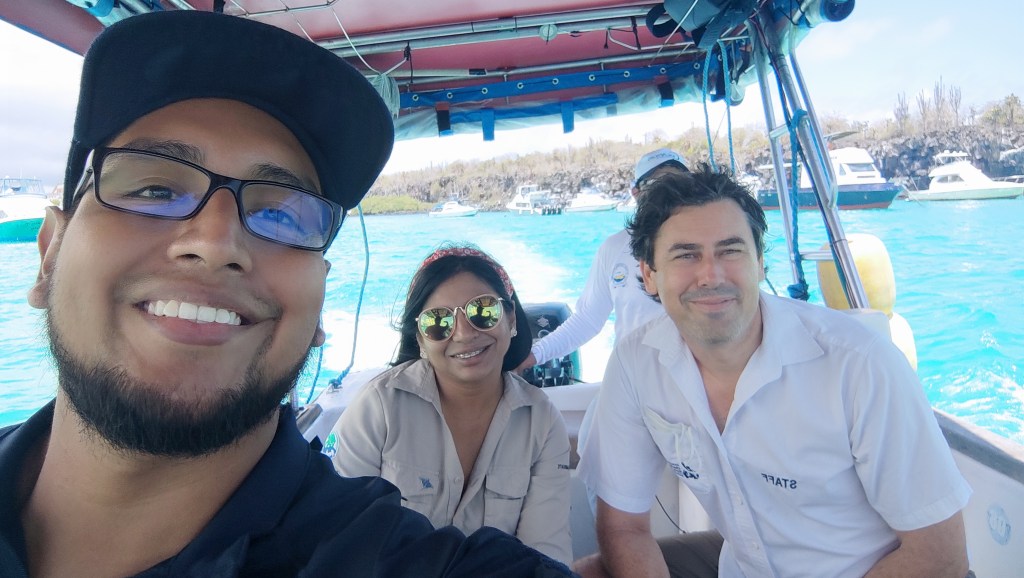
By Divar Castro
Desplácese hacia abajo para ver la publicación en español.
My name is Divar, I am an Oceanography and Meteorology Analyst at INOCAR-Ecuador, most of my life I have been linked to the sea, being the son of a sailor and living most of my life on the beach, has made me fond of the big blue over the years. Recently I have been invited to be part of and learn from the science team of the R/V Atlantis as an Onboard Observer as part of the agreement that exists between the institutions.
From the first day we embarked, along with Jennifer (Galapagos National Park) and Stuart (Charles Darwin Foundation) you could see the passion they all have for research. Friendliness and cordiality were their calling card as each one of them was attentive and with every intention to teach what they know, how to handle the equipment, as well as to learn a little of what one knows about our work area.
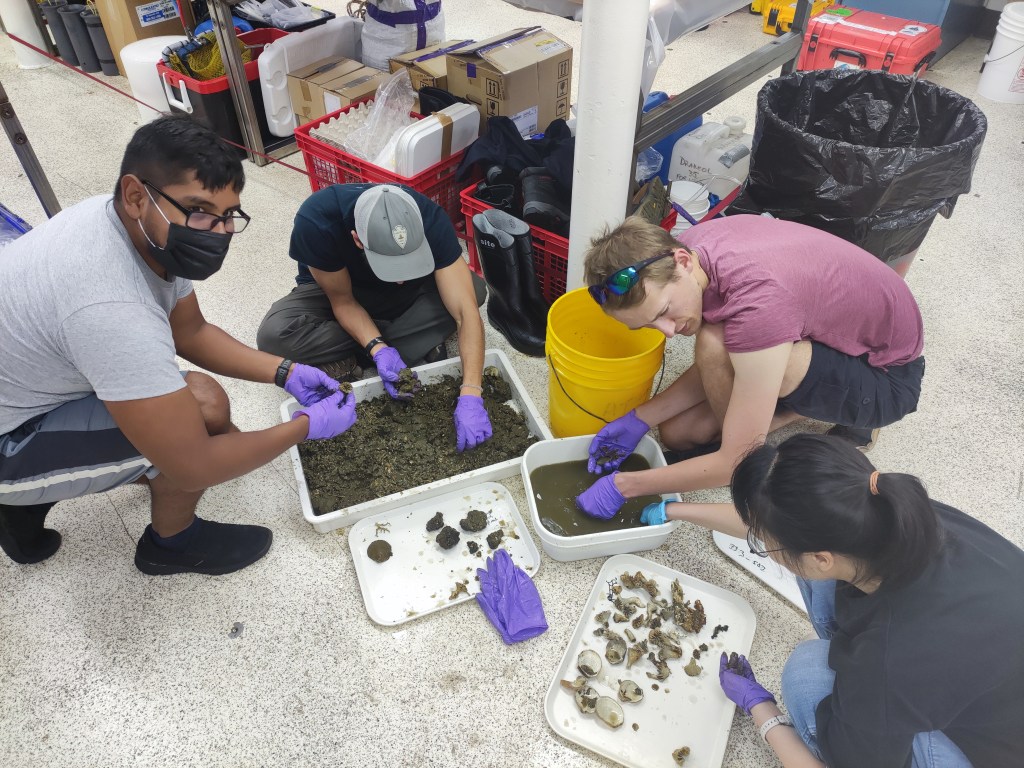
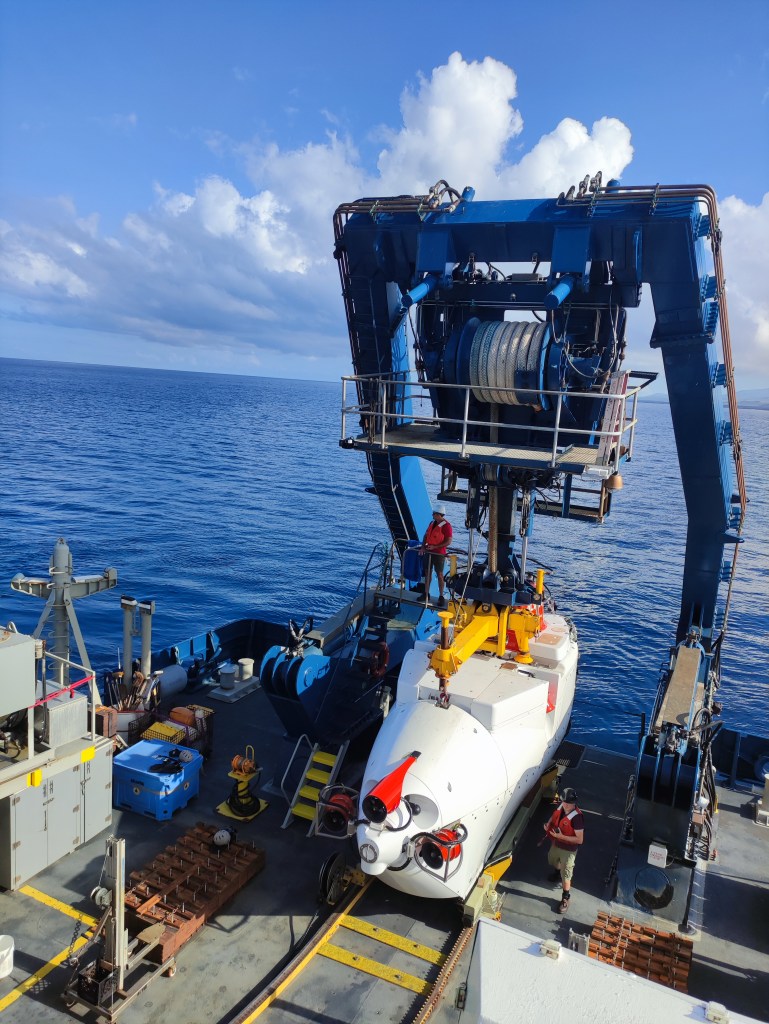
As an Ecuadorian and as an oceanographer, I feel proud to be part of this expedition aboard such a sophisticated vessel, prepared with a large amount of equipment to take samples at sea. Multibeam for bathymetry, multicore for taking sediments from the seabed, multisampler rosette for water samples at different depths, even a manned underwater vehicle, the famous Alvin for exploration and sampling of the seabed, in which we are cordially invited. All this equipment together with the scientific section on board, makes it a once in a lifetime experience.
It is amazing to see how the biology, marine geology, topography, paleontology, and oceanography teams come together and converge in one place. Although to be honest, from the first day I showed more interest in obtaining and analyzing water samples in the multisampler rosette (CTD + Niskin bottles) as it is very much related to my daily activities. The work begins by preparing the rosette before arriving at the point, opening all the bottles, and making sure that the keys are closed, because the last thing we want is to lose a sample. In the same way we verify that the CTD is operational by removing the hoses and safety caps.
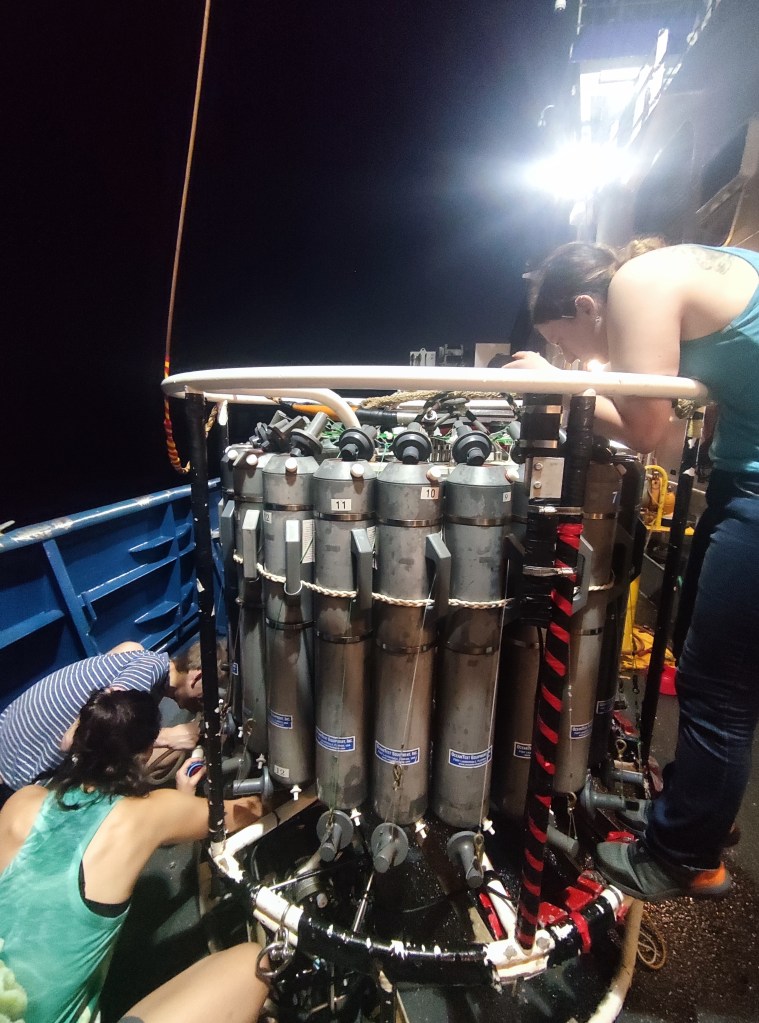
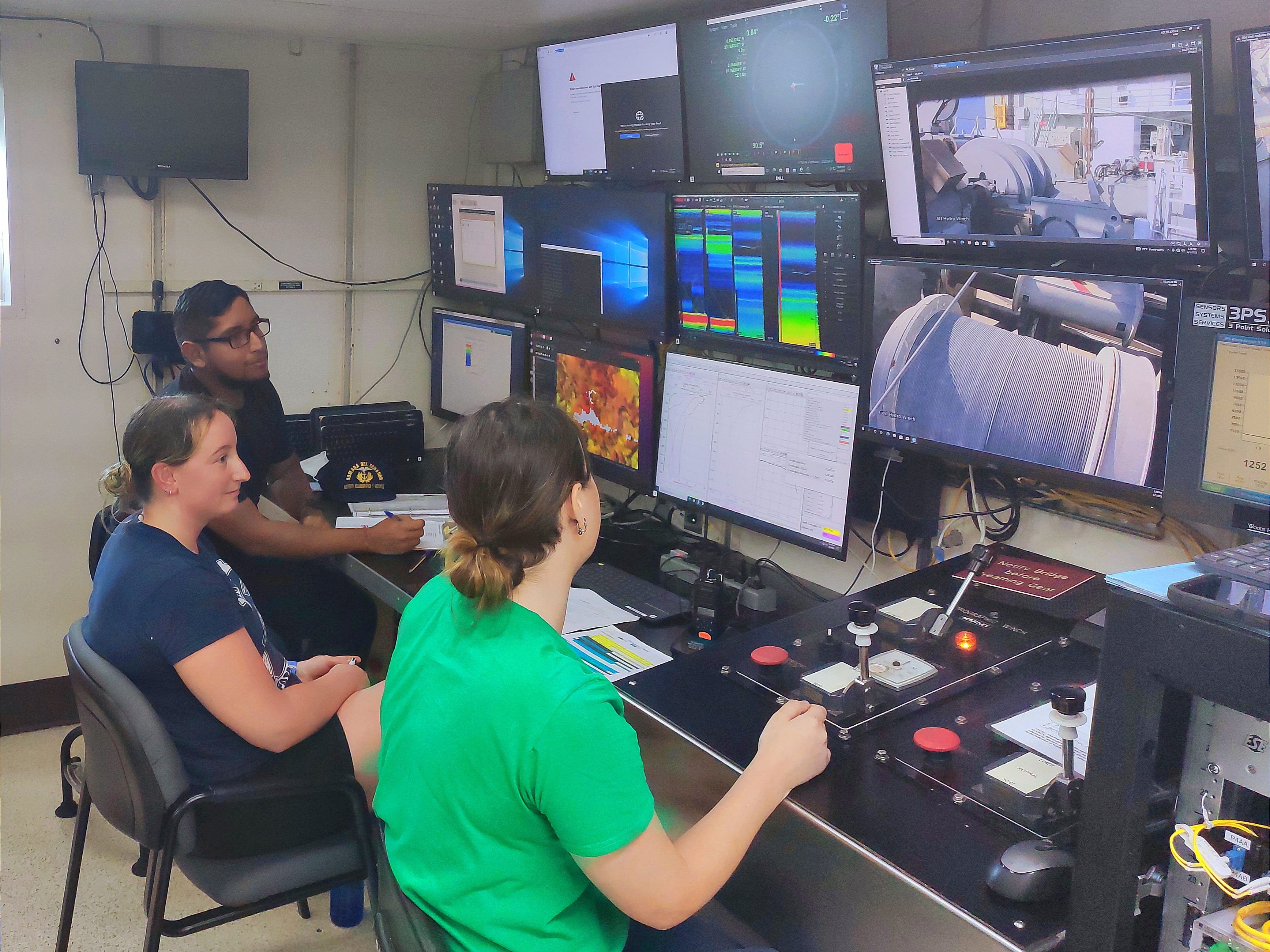
We should mention that the mechanism that the R/V ATLANTIS has corresponded to a real-time measurement, so as the equipment is lowered, the information is verified and we determine at what depth to close the bottles. Once the point is reached, the rosette is lowered to 10 meters from the bottom and the ascent bottles are closed. This operation can take from 30 minutes to more than two hours depending on the depth of the site in question.
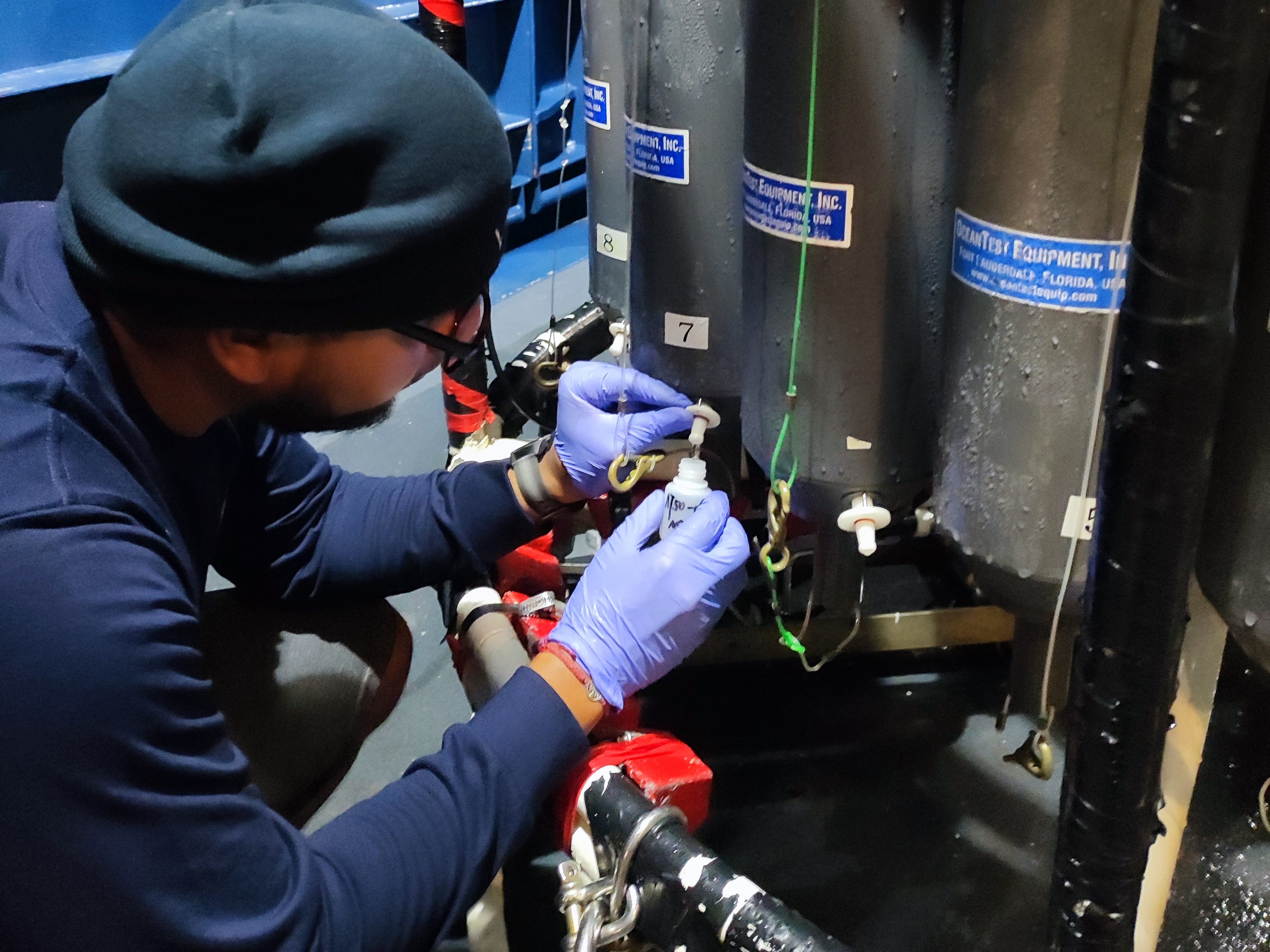
Once the rosette is on board, the real action begins, since the different samples must be taken in previously labeled containers. Among the different samples taken are eDNA, carbonates, nutrients, oxygen, and silicates, which are labeled and preserved for later analysis.
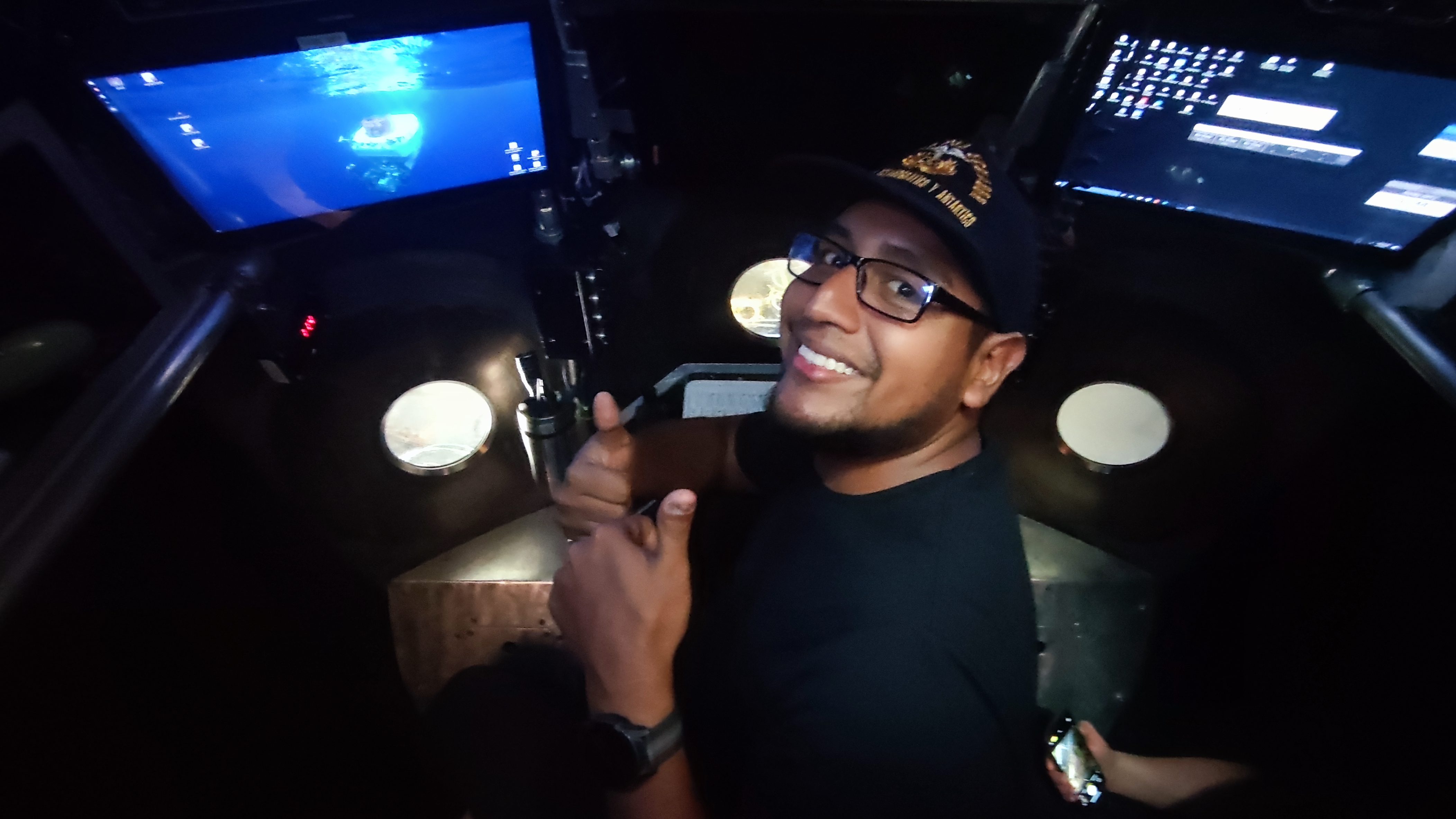
What I have just mentioned corresponds to only a part of the things that happen daily on the ATLANTIS, certainly one of the most exciting is the collection of deep sea samples in the ALVIN, but that is another story.
Dentro de la experiencia del observador a bordo
Por Divar Castro
Mi nombre es Divar, soy Analista de Oceanografía y Meteorología de INOCAR-Ecuador, gran parte de mi vida he estado ligado al mar, siendo hijo de un marino y viviendo gran parte de mi vida en la playa, ha hecho encariñarme con el gran azul a lo largo de los años. Recientemente he sido invitado a ser parte y aprender del equipo de ciencia del R/V Atlantis como Observador a bordo, siendo parte del convenio que existe entre las instituciones.
Desde el primer día que nos embarcamos, junto a Jennifer (Parque Nacional Galápagos) y Stuart (Fundación Charles Darwin) se pudo notar la pasión que tienen todos con la investigación. La amabilidad y cordialidad fueron su carta de presentación pues todos y cada uno de ellos se mostraron atentos y con toda la intención de enseñar lo que saben, como se manejan los equipos, así también como de aprender un poco de lo que uno sabe sobre su área de trabajo.
Como ecuatoriano y como oceanógrafo me siento orgulloso de poder ser parte de esta expedición a bordo de un buque tan sofisticado y preparado con gran cantidad de equipos para realizar toma de muestras en el mar. Multihaz para realizar batimetría, multinúcleos para toma de sedimentos de fondos marinos, roseta multimuestreadora para muestras de agua a diferentes profundidades, incluso un vehículo submarino tripulado, el tan famoso ALVIN para la exploración y obtención de muestras del fondo marino, en el que estamos cordialmente invitados. Toda esta dotación de equipos junto con el apartado científico embarcado, lo hace una experiencia única en la vida.
Es increíble ver como los equipos de biología, geología marina, topografía, paleontología y oceanografía se reúnen y convergen en un solo lugar. Aunque para ser sincero, desde el primer día mostré mayor interés en la obtención y análisis de muestras de agua en la roseta multimuestreadora (CTD + botellas Niskin) pues se relaciona mucho con mis actividades diarias. El trabajo empieza preparando la roseta antes de llegar al punto, se abren todas las botellas y se asegura que las llaves estén cerradas, pues lo que menos queremos es perder una muestra. De la misma forma nos encargamos de verificar que el CTD se encuentre operativo quitando las mangueras y tapas de seguridad.
Debemos mencionar que el mecanismo que posee el R/V ATLANTIS corresponde a una medición en tiempo real, por lo que a medida que va bajando el equipo se va verificando la información y determinando a que profundidades cerrar las botellas. Una vez llegado al punto se procede a bajar la roseta hasta los 10 metros del fondo y se cierran las botellas de subida. Esta operación puede demorar desde 30 minutos hasta más de dos horas dependiendo de la profundidad del sitio en cuestión. Una vez se encuentre abordo la roseta empieza la verdadera acción, puesto que hay que tomar las diferentes muestras en envases previamente rotulados. Entre las diferentes muestras que se toman están eDNA, carbonatos, nutrientes, oxígeno y silicatos que se rotulan y preservan para su posterior análisis en tierra, puesto que la embarcación no posee un laboratorio de muestras de agua a bordo.
Lo que les acabo de mencionar corresponde solo a una parte de las cosas que ocurren diariamente en el ATLANTIS, sin duda una de las más emocionantes es la recolección de muestras de fondo en el ALVIN, pero esa es otra historia.

 Galápagos Deep 2023 Expedition
Leave a comment