By James Kershaw
Desplácese hacia abajo para ver la publicación en español.
I’ve always been relatively happy on dry land, so I was pretty apprehensive about heading to sea for the first time. The prospect of being sea-sick while in the sole company of my fellow scientists was enough to increase those nerves in the days leading up to the expedition. And yet, 7 days in, I’m having a wonderful time.
Sadly, I haven’t had a romantic dream of doing science at sea since the age of 5, which would have made writing this blog much easier. But, during my time at school and university I slowly fell in love with studying the natural world, and eventually with studying Earth’s climate and our Ocean. In the end, I applied for a PhD at the University of Bristol, and was incredibly fortunate to be given this fantastic opportunity to study the climate, oceanography, biology and geology of the ocean surrounding the Galapagos Islands. I felt – and still feel – extremely excited and privileged to be able to visit this amazing part of the world and do the science I love. However, having never been to sea before, I really had no idea what to expect from the actual going-to-sea part of this expedition.
All the information I had about life at sea was based on what friends and colleagues had told me. Generally, their stories revolved around the coolest/most extreme/most disgusting things that had happened to them: seasickness, foul weather and huge waves, long shifts to get your science done. None of those things sounded particularly appealing to me, and yet, everyone I spoke to said they loved it. I was pretty confused.
But now, after a few days at sea, I understand completely what those people meant. The first few hours after we boarded the ship illustrate this perfectly. The ship we are working on – the R/V Atlantis – was anchored offshore, so we boarded from a small boat (a water taxi), before being taken straight to the main lab on board where we took Covid tests. From there – and before being given any tour of the ship, or doing any substantial introductions – we immediately started cleaning up the labs we were working in so that we could start setting them up. It turns out this trend of trying to do work while being completely lost in your surroundings (Where was my bag? Where was my room? Who was everyone? Where were all the chemicals we needed to clean the labs? And, crucially: where on earth were the labs we were supposed to be cleaning?) was entirely typical of my first few days on the ship.

It costs huge amounts of money use a research vessel like the Atlantis (think $100,000 per day), so there is almost always something going on to make sure we are using that time as effectively as possible. The past few days have been a blur of setting up labs, planning our sampling sites and learning new techniques. The work has been intense but rewarding, and having a friendly and supportive crew and science team makes everything easier. It’s taken me a long time to get used to the layout of the ship, which is a maze of doors, stairways and containers. It doesn’t help that lots of things which have perfectly sensible names on land are referred to differently at sea. Toilets are called heads. Beds are called berths. The floors are the decks, the kitchen is the galley, the windows are portholes, left is port, right is starboard, moving forward on the ship is referred to as moving forwards, but moving backwards is moving aft.
And yet, the experience is wonderful. It is an immense privilege to be able to carry out science activities in such an incredible location, and there’s a constant sense of excitement at the science we are doing and the new things we are finding. The feeling of being in the middle of the ocean – the only group of people visible in all directions, with no land in sight – has been amazing. Some of the best moments so far have been standing on the bow of the ship, watching the waves as the ship slips through the water on its way to our next destination. We’ve seen incredible marine life and some beautiful coastlines, and the feeling of freedom and adventure has been more than I could ever have imagined.

My first time at sea has more than lived up to my expectations. It’s been hard work, and an extremely steep learning curve. But at the same time, it’s exciting, exhilarating and an experience that I’m extremely grateful to be a part of.
Primera vez en el mar: expectativas vs realidad
Por James Kershaw
Siempre he sido relativamente feliz en tierra firme, así que estaba bastante preocupado por ir al mar por primera vez. La perspectiva de marearme en el mar solo en compañía de mis compañeros científicos fue suficiente para aumentar esos nervios en los días previos a la expedición. Y, sin embargo, 7 días después, me lo estoy pasando de maravilla.
Lamentablemente, no he tenido un sueño romántico de hacer ciencia en el mar desde la edad de 5 años, lo que hubiera hecho que escribir este blog fuera mucho más fácil. Pero, durante mi tiempo en la escuela y la universidad, poco a poco me enamoré de estudiar el mundo natural y, finalmente, estudiar el clima de la Tierra y nuestro océano. Al final, solicité un doctorado en la Universidad de Bristol y tuve la increíble suerte de tener esta fantástica oportunidad de estudiar el clima, la oceanografía, la biología y la geología del océano que rodea las Islas Galápagos. Me sentí, y todavía me siento, extremadamente emocionado y privilegiado de poder visitar esta increíble parte del mundo y hacer la ciencia que amo. Sin embargo, como nunca antes había estado en el mar, realmente no tenía idea de qué esperar de la parte real de ir al mar de esta expedición.
Toda la información que tenía sobre la vida en el mar se basaba en lo que me habían contado amigos y compañeros. En general, sus historias giraban en torno a las cosas más geniales/más extremas/más repugnantes que les habían sucedido: mareos, mal tiempo y olas enormes, turnos largos para hacer ciencia. Ninguna de esas cosas sonaba particularmente atractiva para mí y, sin embargo, todos con los que hablé dijeron que les encantaba. Estaba bastante confundido.
Pero ahora, después de unos días en el mar, entiendo completamente lo que esas personas querían decir. Las primeras horas después de abordar el barco lo ilustran perfectamente. El barco en el que estamos trabajando: el R/V Atlantis– estaba anclado en alta mar, por lo que abordamos desde un bote pequeño (un taxi acuático), antes de ser llevados directamente al laboratorio principal a bordo donde tomamos las pruebas de Covid. A partir de ahí, y antes de dar un recorrido por el barco o hacer presentaciones importantes, inmediatamente comenzamos a limpiar los laboratorios en los que estábamos trabajando para poder comenzar a configurarlos. Resulta que esta tendencia de tratar de hacer el trabajo mientras estás completamente perdido en tu entorno (¿Dónde estaba mi bolso? ¿Dónde estaba mi habitación? ¿Quiénes eran todos? ¿Dónde estaban todos los productos químicos que necesitábamos para limpiar los laboratorios? Y, lo más importante: ¿dónde en ¿Qué tierra eran los laboratorios que se suponía que íbamos a limpiar?) era completamente típico de mis primeros días en el barco.
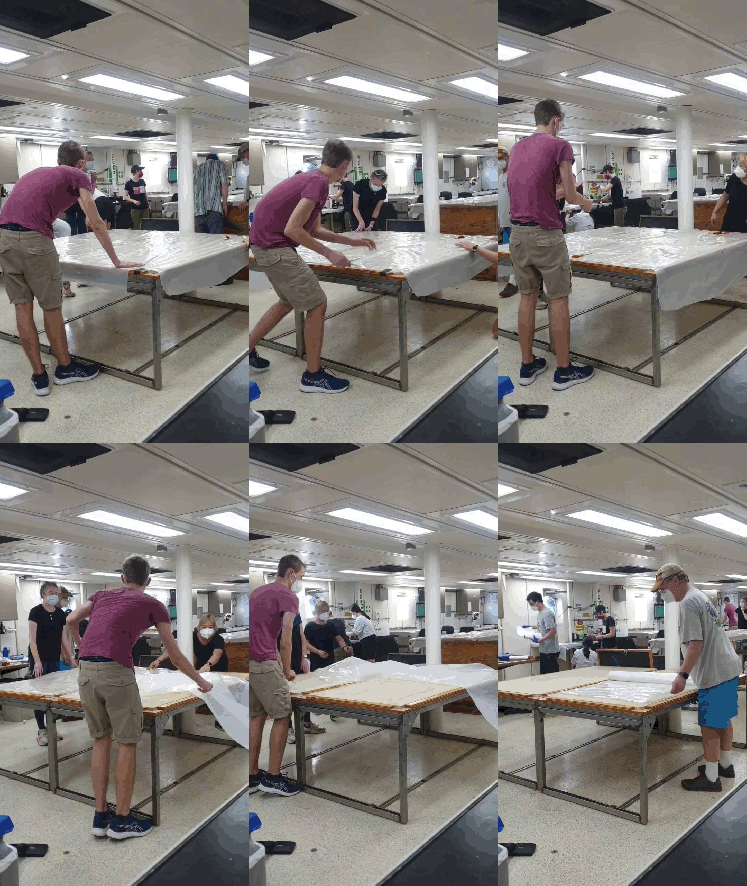
Cuesta enormes cantidades de dinero utilizar un buque de investigación como el Atlantis(Piense en $ 100,000 por día), por lo que casi siempre hay algo para asegurarnos de que estamos usando ese tiempo de la manera más efectiva posible. Los últimos días han sido un borrón de instalación de laboratorios, planificación de nuestros sitios de muestreo y aprendizaje de nuevas técnicas. El trabajo ha sido intenso pero gratificante, y contar con un personal y un equipo científico amigable y solidario hace que todo sea más fácil. Me tomó mucho tiempo acostumbrarme al diseño del barco, que es un laberinto de puertas, escaleras y contenedores. No ayuda que muchas cosas que tienen nombres perfectamente sensatos en tierra se llamen de manera diferente en el mar. Los baños se llaman cabezas. Las camas se llaman literas. Los pisos son las cubiertas, la cocina es la cocina, las ventanas son los ojos de buey, la izquierda es babor, la derecha es estribor, avanzar en el barco se conoce como avanzar,
Y, sin embargo, la experiencia es maravillosa. Es un inmenso privilegio poder llevar a cabo actividades científicas en un lugar tan increíble, y hay una sensación constante de entusiasmo por la ciencia que estamos haciendo y las cosas nuevas que estamos encontrando. La sensación de estar en medio del océano, el único grupo de personas visible en todas las direcciones, sin tierra a la vista, ha sido increíble. Algunos de los mejores momentos hasta ahora han sido estar de pie en la proa del barco, observando las olas mientras el barco se desliza por el agua en su camino hacia nuestro próximo destino. Hemos visto una vida marina increíble y algunas costas hermosas, y la sensación de libertad y aventura ha sido más de lo que podría haber imaginado.
Mi primera vez en el mar ha cumplido con creces mis expectativas. Ha sido un trabajo duro y una curva de aprendizaje extremadamente empinada. Pero al mismo tiempo, es emocionante, emocionante y una experiencia de la que estoy muy agradecido de ser parte.

 Galápagos Deep 2023 Expedition
Leave a comment